- Home
- Asteroid mining
Asteroid mining in real life, and how far the games stretch it
No company has mined an asteroid yet. What exists are a handful of space missions that have touched asteroids, brought grains of them home or set off to study a metal-rich one. This page covers those missions, the treaty that frames who can own what in space, and where the games on this site take liberties.
- First NASA asteroid sample
- Sept 24, 2023
- Source asteroid
- Bennu
- Psyche arrival
- Aug 2029
- Outer Space Treaty
- In force 1967
Checked November 19, 2026 against NASA, JAXA and UN Office for Outer Space Affairs pages
What asteroid mining means
Asteroid mining is the idea of extracting useful material, such as water ice or metals, from asteroids instead of from Earth. It shows up constantly in games because the picture is simple: a rock full of value floating in space. In reality, the steps that come before mining, which are reaching an asteroid, landing or touching down, and bringing anything back, have only been done a few times, by government space agencies, for science.
Missions that have touched real asteroids
| Mission | Agency | Target | Key dates (from the agency) |
|---|---|---|---|
| OSIRIS-REx | NASA | Bennu | Launched Sept 8, 2016; sampled Oct 20, 2020; sample delivered Sept 24, 2023 |
| Hayabusa2 | JAXA | A C-type asteroid | Launched Dec 3, 2014 |
| Psyche | NASA | Psyche, a metal-rich asteroid | Launched Oct 13, 2023; prime mission from Aug 2029 |
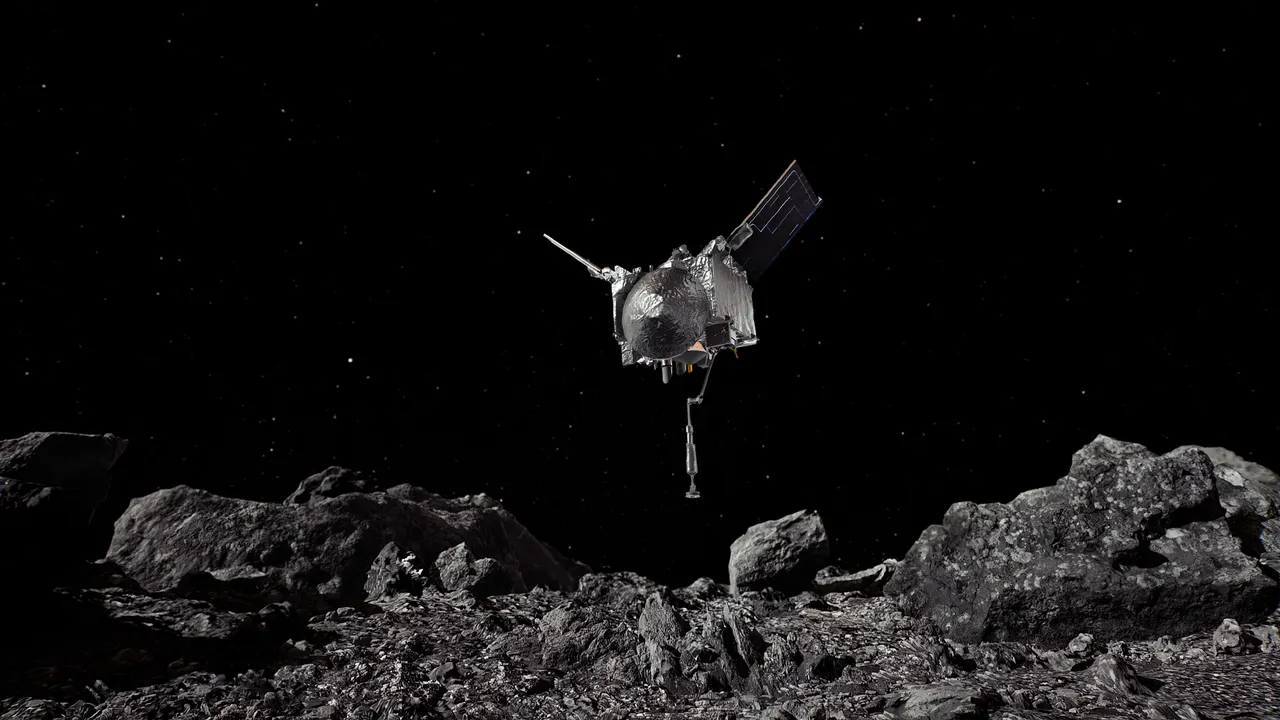
OSIRIS-REx and Bennu
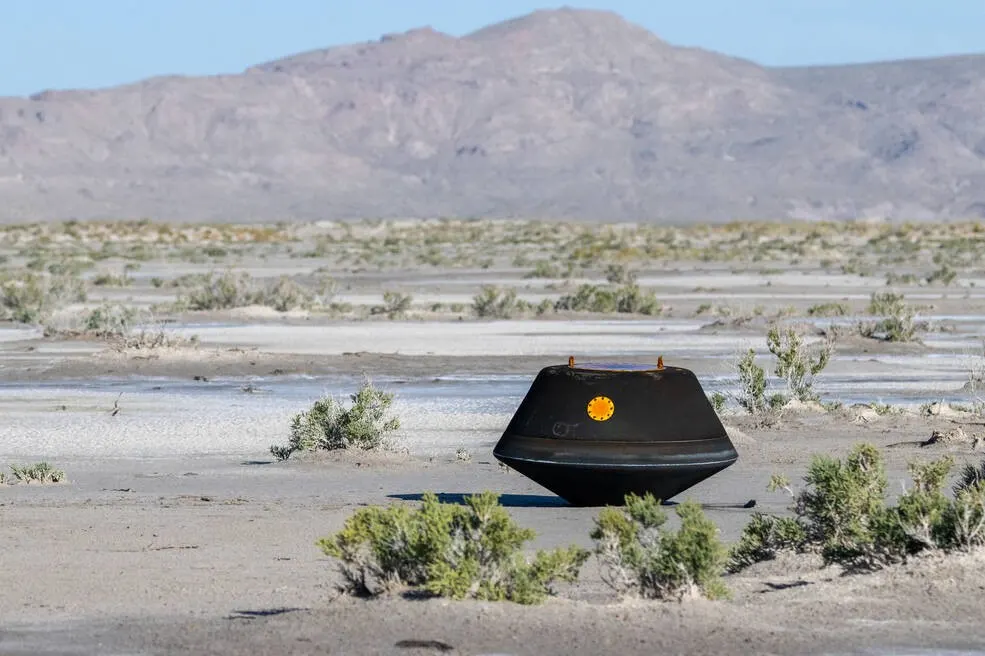
NASA's OSIRIS-REx spacecraft collected a sample of rocks and dust from the surface of asteroid Bennu on October 20, 2020. On September 24, 2023 it released a capsule over Earth, which parachuted down to the Department of Defense's Utah Test and Training Range, where the team recovered it. NASA describes it as its first asteroid sample to land. The goal was science, chiefly what the grains reveal about the early solar system, not resources.
Hayabusa2
JAXA's Hayabusa2 launched on December 3, 2014 to a C-type asteroid. Its project page describes a "collision device" designed to blast a small artificial crater, a few metres across, so the spacecraft could sample material that had been less weathered by space and heat. That is the closest a real mission has come to the games' idea of blasting into a rock to reach what is inside.
Psyche: the metal asteroid
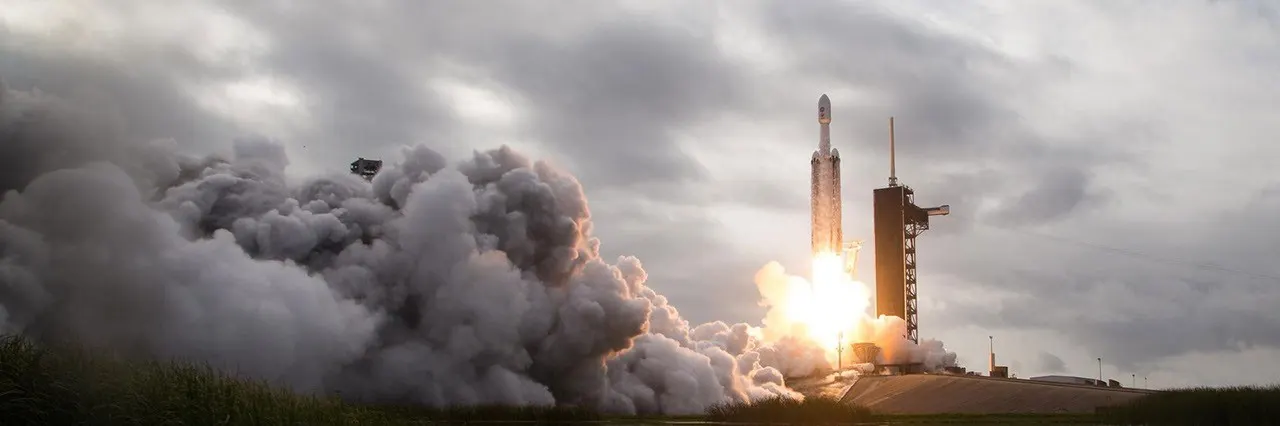
NASA's Psyche spacecraft launched on October 13, 2023 and is headed for asteroid Psyche in the main belt between Mars and Jupiter. NASA says scientists think the asteroid has a high metal content and may be the partial core of a planetesimal, a building block of an early planet. The prime mission begins in August 2029 and will spend about two years orbiting, mapping and measuring the asteroid's composition. It will not mine anything, but it is the mission most often mentioned in the same breath as asteroid mining because of that metal.
Who owns an asteroid?
The basic framework is the Outer Space Treaty, opened for signature in January 1967 and in force since October 1967. According to the UN Office for Outer Space Affairs, its principles include that outer space is free for exploration and use by all states, and that outer space, including the Moon and other celestial bodies, is not subject to national appropriation by claim of sovereignty, by means of use or occupation, or by any other means. Whether extracting resources counts as appropriation is a live legal argument. Individual countries have their own laws on space resources, and those are To be verified for any specific claim before you rely on them.
How the games bend the science
- Scale and speed. In No Asteroids one miner and a few friends remove 5,000,000 m³ of rock in 90 days. Real missions have handled grams, not cubic metres.
- Physics. ΔV: Rings of Saturn is the exception that takes physics seriously, down to invisible lasers and heat management. See the ΔV: Rings of Saturn page.
- Economics. Astronomics frames mining as gig work for a company, which is closer to how commercial proposals are usually pitched than to any mission flown so far. See the Astronomics game page.
- Danger. Games make asteroids threats or treasure chests. The real missions above were careful, slow and years long.
From real missions to asteroid mining games
If this page has you curious about the fictional version, the best asteroid mining games comparison lines up four of them on price, platforms and co-op, and the No Asteroids game overview covers the newest one, where a 5,000,000 m³ rock is heading for Earth and the fix is a pickaxe.
Questions players ask
Has anyone mined an asteroid?
Not in the commercial sense. Missions such as NASA's OSIRIS-REx and JAXA's Hayabusa2 collected small samples for science, which is sample return, not mining.
What was the first asteroid sample NASA brought back?
OSIRIS-REx collected rocks and dust from asteroid Bennu on October 20, 2020, and its capsule landed at the Department of Defense's Utah Test and Training Range on September 24, 2023, according to NASA.
What is the Psyche mission?
A NASA spacecraft launched on October 13, 2023 to a metal-rich asteroid of the same name in the main belt between Mars and Jupiter. NASA says its prime mission begins in August 2029 and lasts about two years.
Is asteroid mining legal?
The 1967 Outer Space Treaty says outer space, including celestial bodies, is not subject to national appropriation by claim of sovereignty, use or occupation. How that applies to resources taken from an asteroid is debated and depends on national laws, which this page does not cover in detail.
Which game is closest to real asteroid mining?
ΔV: Rings of Saturn, which models thrust, heat and momentum and avoids invented technology like energy shields. No Asteroids is deliberately playful: a lone miner with a pickaxe against a 5,000,000 m³ rock.
Sources checked
- NASA Science: OSIRIS-REx mission page checked Nov 19, 2026
- NASA release 23-109: First asteroid sample has landed Sep 24, 2023
- NASA Science: Psyche mission page checked Nov 19, 2026
- JAXA: Hayabusa2 project page checked Nov 19, 2026
- UNOOSA: Outer Space Treaty overview checked Nov 19, 2026
Unofficial fan site, not affiliated with Unruled Games or any other studio named here. Facts come from Steam store pages, official news posts and developer sites; anything they don't confirm is marked To be verified.